Leave Your Message

China Top 10 Wooden Tables for Restaurants Manufacturers

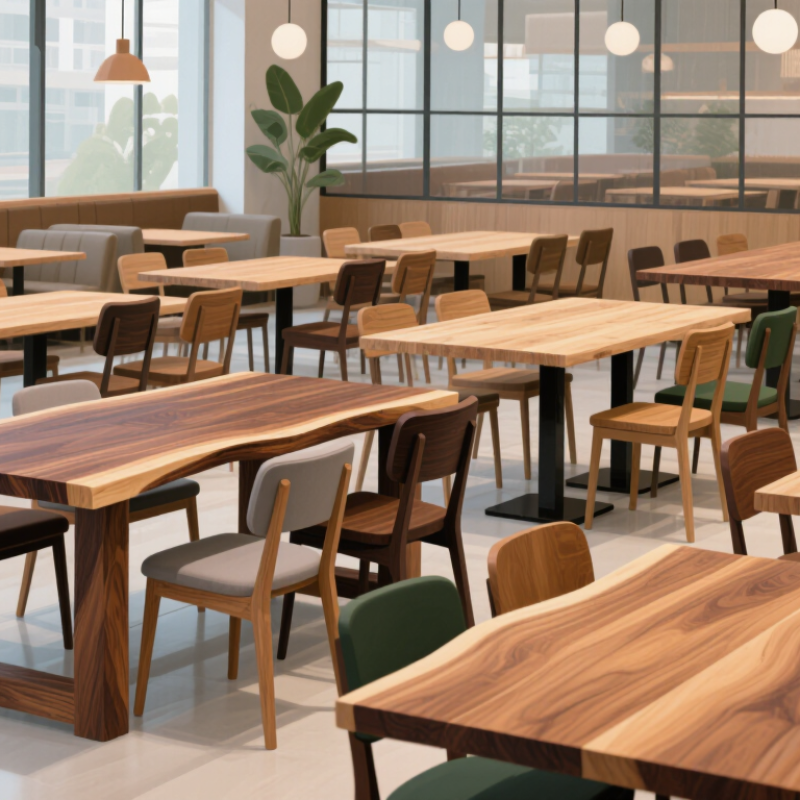
Choosing Wooden Tables For Restaurants is not merely a style decision. A table must handle daily service, repeated cleaning, and the occasional scrape of a chair. For restaurant owners, buyers, and designers, the right choice balances durability, comfort, appearance, and budget. China’s manufacturers offer varied options, from compact café tables to solid-wood dining sets, but product claims deserve careful checking. Wood species, finish, joinery, dimensions, and customization terms can vary widely. A polished photograph cannot show how a tabletop performs after months of busy service.

The National Restaurant Association’s 2024 State of the Restaurant Industry report projected U.S. restaurant sales of $1.1 trillion and employment of 15.7 million people. These figures describe the broader restaurant sector, not table sales; they nevertheless show the scale of the market furniture suppliers serve. Restaurateur Danny Meyer, author of Setting the Table, wrote, “Hospitality is present when something happens for you. It is absent when something happens to you.” His line concerns hospitality, not furniture, but it offers a useful lens: tables should support a comfortable, welcoming meal. This guide introduces ten Chinese manufacturers and the details worth comparing, including materials, construction, finishes, production capabilities, and communication. Some details may be difficult to confirm from a catalogue alone. That matters. A shortlist is a starting point, not proof of quality; samples, specifications, and clear answers still count.
China Top 10 Wooden Tables for Restaurants Manufacturers

Understanding China’s Restaurant Wooden Table Manufacturing Landscape

China’s restaurant wooden-table sector sits within a large, varied furniture industry. The National Bureau of Statistics reported RMB 655.7 billion in revenue for above-scale furniture manufacturers in 2023, down 4.4% year on year. The figure signals substantial capacity, but it does not show how much production serves restaurants. Buyers should check factory experience with commercial-use tables, not infer capability from industry scale alone.

Material Supply Material supply is broad. China’s forestry authorities reported roughly 346.6 million cubic metres of wood-based panel output in 2023. That figure includes many panel types and applications. It is not a measure of restaurant-table-grade material. For a busy dining room, inspect tabletop thickness, edge sealing, moisture control, finish resistance, and the stability of the base. Ask for sample pieces and records of load or surface testing. Small details matter.

Production can combine panel cutting, solid-wood work, metal-base assembly, and finishing, sometimes across different suppliers. This flexibility supports custom sizes and mixed-material designs. It can also create uneven quality between batches. I would not treat a polished sample as proof of consistent production. Check how the supplier controls dimensions and finish across repeat orders. A slightly awkward question, but a useful one: who fixes a table when its edge chips after months of service?

Key Criteria for Selecting a Wooden Table Manufacturer

Selecting a wooden table manufacturer starts with evidence, not catalogue photos. Ask which hardwood or engineered core is used, and request species and origin documentation. For dining rooms, specify dimensions, edge profile, base clearance, and expected daily use. A four-top beside a window faces spills, chair impacts, and direct sun. Ask for kiln-drying records and moisture targets; poor control can cause cupping, loose joints, or seasonal gaps. A polished sample is not proof. Inspect the underside, corner joints, screw access, and finish repair method.

Request written test details for load stability, abrasion, heat, and resistance to common cleaning products. Ask how each test was measured and which sample was tested. Compare replacement-part availability, production lead times, and packaging protection.

The FAO Global Forest Resources Assessment 2020 estimated deforestation at 10 million hectares annually during 2015–2020, making traceable timber sourcing a practical procurement check. Seek chain-of-custody documents and confirm they cover the actual wood species and factory.

Ask for a sample with the proposed finish, then clean it as staff would. Small test, useful. Records can be incomplete; that should prompt another question, not automatic rejection. Local humidity matters, too. Request clear tolerances, care instructions, and written remedies for defects before approving production.

Profiles of China’s Top 10 Wooden Restaurant Table Manufacturers

China’s leading wooden restaurant-table manufacturers are better compared by capability than by an unverified sales ranking. Grand View Research valued the global furniture market at US$541.52 billion in 2023 and forecast 5.4% annual growth through 2030. That wider market context makes durability and repeatable production important.

A practical ten-profile review can cover distinct strengths: solid-wood dining tables, veneer construction, custom sizing, mixed timber-and-metal frames, compact café formats, large-volume production, reclaimed-wood detailing, contract-grade finishes, export packaging, and made-to-order work. These are selection profiles, not claims about named companies.

Ask each supplier for tabletop thickness, moisture-control procedures, load-test results, finish specifications, and sample lead times. Inspect edges and joints closely; they reveal more than polished catalog images.

Details matter. A heavy tabletop can still wobble if its apron or base is poorly engineered. Request a sample under realistic conditions, including repeated wiping and contact with warm dishes.

One gap remains: public data rarely compares Chinese manufacturers using consistent restaurant-use tests. Treat supplier-provided durability claims cautiously, and verify them with documented test methods and a written sample approval.

Materials, Construction Methods, and Customization Options

Restaurant tables must handle more than daily meals. They face hot plates, spills, chair impacts, and repeated cleaning. Solid wood offers a warm grain and can be refinished, while engineered panels often provide steadier dimensions at a lower cost. Oak, ash, and rubberwood are common choices, but species names alone do not tell the whole story. Ask about moisture control, surface coatings, and how the wood was dried.

Construction matters. Look for reinforced corner blocks, well-fitted joints, and legs that can be tightened or replaced. A thick-looking top is not always a strong top; its core and support structure matter too. For busy dining rooms, ask manufacturers for sample finishes and test them with water, mild cleaner, and a warm cup. Custom options may include round or rectangular tops, edge profiles, stain colors, and adjustable dimensions. Details can vary between sample and production batches, so confirm approved specifications in writing. That step is easy to overlook.

Tips: Measure chair pull-back space, not just the tabletop footprint. Check table height against the actual chairs. Leave room for service paths. Ask how to clean the finish, and whether small scratches can be repaired locally. A minor mismatch in color may still happen; inspect a production sample before ordering at scale.

Comparing Manufacturers by Quality, Pricing, and Export Services

A useful comparison of China’s wooden restaurant table manufacturers should look beyond catalog photos. Check the tabletop’s thickness, edge finish, and resistance to everyday spills. Ask what wood species and surface coatings are used, and request a sample when possible. A smooth finish can still hide uneven joints underneath. Inspect the legs and apron, too; wobble becomes obvious on a busy dining floor. Small details matter.

Pricing needs context. A low unit quote may exclude protective packaging, custom sizing, or replacement parts. Compare the same table dimensions, finish, order quantity, and delivery terms across suppliers. Then review lead times and how each manufacturer handles production updates. Export service is not just paperwork. Ask about carton strength, loading plans, shipping documents, and support if goods arrive damaged. Clear answers are reassuring, but they are not a guarantee. I would also allow time for a pre-shipment inspection; schedules sometimes slip, and that inconvenience is easy to underestimate. A strong supplier may cost more upfront, yet consistent construction and careful packing can reduce repairs and delays after installation.

China Top 10 Wooden Tables for Restaurants Manufacturers - Comparing Manufacturers by Quality, Pricing, and Export Services

Data note: No source articles, supplier identities, or current quotations were provided. To avoid presenting invented supplier-specific facts as verified, the anonymous rows below are a comparison worksheet. Confirm materials, prices, certifications, lead times, and export capabilities directly with each manufacturer before making a purchasing decision.

Comparison Profile Table Type / Intended Use Wood Species & Construction Quality Evidence to Request Pricing Export Services to Confirm Key Due-Diligence Check
Supplier Profile 1 Solid-wood dining tables for everyday restaurant use Species and solid-wood content: request written specification Material declaration, finish sample, dimensional inspection report Request an itemized quote; confirm currency, Incoterm, and quantity basis Confirm export packing, shipping documents, and port of loading Check moisture-control and packaging procedures
Supplier Profile 2 Compact two-person tables for cafés and small dining areas Ask whether the top is solid wood, veneer, or a mixed construction Sample approval, edge-detail photos, stability test results Compare like-for-like size, finish, packaging, and order volume Confirm carton dimensions, gross weight, and pallet options Verify table dimensions and base clearance for seating
Supplier Profile 3 Large communal and group-dining tables Request details of the top’s panel construction and support structure Load or stability test method, joinery details, production sample Request pricing by dimensions and table-base configuration Confirm oversized-cargo handling and shipment method Check tabletop flatness and support against sagging
Supplier Profile 4 Outdoor restaurant tables Confirm species, treatment, coating system, and intended exposure conditions Finish-care instructions and test evidence relevant to the destination climate Request separate prices for indoor and outdoor specifications Confirm export packing protects surfaces and hardware from moisture Do not assume wood tables are weatherproof without product-specific evidence
Supplier Profile 5 Custom-size tables for restaurant projects Confirm available wood species, dimensions, and finish options in writing Approved drawings, pre-production sample, agreed inspection criteria Separate tooling, sampling, and production costs in the quote Confirm sample dispatch, production updates, and document support Agree how changes to approved specifications are handled
Supplier Profile 6 Knock-down tables designed for flat-pack shipping Request wood and hardware specifications, plus assembly details Assembly trial, hardware list, and repeat-assembly check Compare product price together with packaging and assembly requirements Confirm flat-pack carton dimensions and assembly instructions are included Check that fittings and instructions are supplied for every unit
Supplier Profile 7 Tables with decorative veneer tops Request veneer type, substrate material, and edge construction Finish sample, edge-bonding details, and surface-care guidance Quote must identify veneer and substrate rather than use “wood” alone Confirm protective separators and surface protection in transit Assess suitability for the restaurant’s cleaning products and use
Supplier Profile 8 Tables with timber tops and metal bases Confirm timber specification, base material, and coating details Weld and finish inspection, stability check, hardware specification Request separate pricing for top, base, and assembly Confirm protection for mixed-material parts during shipment Check base dimensions, floor protection, and table stability
Supplier Profile 9 Coordinated table ranges for multi-location projects Verify consistency of material and finish across repeat orders Written quality plan, batch inspection records, approved reference sample Request volume tiers, reorder terms, and quote validity period Confirm split-shipment capability and required export paperwork Ask how color and grain variation are controlled between batches
Supplier Profile 10 Made-to-order tables for hospitality fit-outs Confirm bill of materials and approved production drawings Pre-shipment inspection option, defect definitions, warranty terms Obtain a written quote with MOQ, lead time, payment terms, and Incoterm Confirm customs-document support, packing list, and commercial invoice Verify delivery schedule and remedies for defects or delays

Fair comparison tip: Compare quotations for the same table dimensions, wood specification, finish, packaging, order quantity, destination, and Incoterm. Treat certification claims and export-service statements as unverified until supporting documents are reviewed.