Leave Your Message

How to Choose a Solid Wood Credenza for Your Home?

Choosing a Solid Wood Credenza is not simply a style decision. It is a practical investment in storage, durability, and responsible material use. The piece may hold dinnerware, books, or a heavy television, so construction matters as much as appearance. In real homes, uneven floors, sunlight, humidity, and daily drawer use quickly reveal weak design.

Professional reports offer useful context. The FAO’s Global Forest Resources Assessment 2020 states that forests cover about 31% of the world’s land area. It also records roughly 420 million hectares of forest lost between 1990 and 2020. These figures make timber sourcing a serious purchasing question. The FSC Facts and Figures report identifies more than 160 million hectares of FSC-certified forests worldwide, giving shoppers one practical reference for responsible supply chains. Certification is not everything, but it improves traceability.

Look closely.

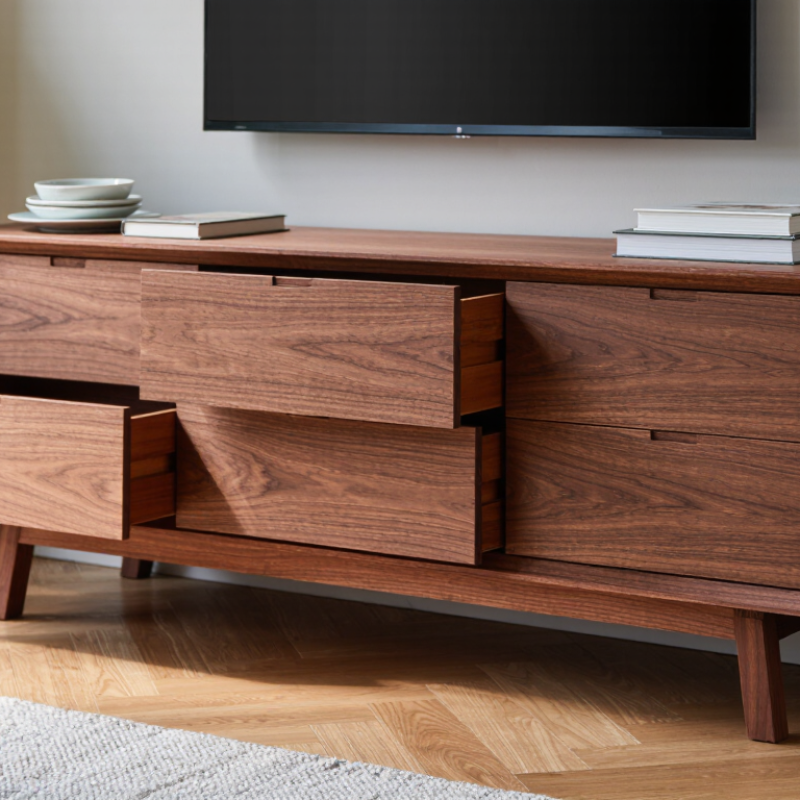
Run your hand across the tabletop. A quality credenza should feel stable, with consistent grain and carefully finished edges. Open each drawer slowly. Dovetail joints, smooth runners, and a firm back panel often indicate better workmanship. Ask about the wood species, moisture control, finish, and repair policy. I would not trust a vague answer. A beautiful showroom can hide thin panels or unstable joinery. That is an easy mistake to make. This guide will compare dimensions, construction details, certification claims, and long-term maintenance. Its goal is a balanced choice, not the most expensive one.
How to Choose a Solid Wood Credenza for Your Home?

Define Storage Needs, Room Dimensions, and Credenza Capacity Requirements

How to Choose a Solid Wood Credenza for Your Home?

Define storage before choosing a style. Count dishes, books, cables, linens, and items needing hidden storage. Measure each group in centimeters, including handles and protective cases. The U.S. Census Bureau’s 2023 American Community Survey reports an average household size of about 2.5 people. That figure suggests storage needs vary widely, even in similar homes. A couple may need fewer compartments, while a family may require adjustable shelves and stronger drawers.

Measure the wall, doorway, and walking route. NAHB’s 2024 analysis of Census data places the median new single-family home size at 2,411 square feet. Larger homes still need careful furniture planning. Leave roughly 30 to 36 inches for comfortable circulation. Check door swing and nearby heating vents. A credenza that fits the wall may still obstruct daily movement. Measure twice. I once missed the baseboard depth.

Estimate capacity from usable interior space, not exterior width. Subtract the frame, back panel, shelves, and drawer boxes. Keep 20% of the interior free for future purchases and easier access. Solid wood adds durability, but it can also increase weight. Confirm the floor surface is level and the cabinet has stable support. For a 72-inch credenza, divide storage between drawers and enclosed doors. Use drawers for frequent items. Store heavier objects on lower shelves. The 2024 U.S. Houzz & Home Study emphasizes function-led renovation decisions, a useful principle here. Capacity is rarely perfect on paper. Recheck your list after living with it for one week.
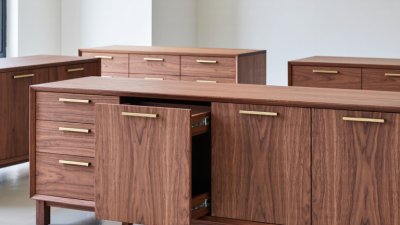
How to Choose a Solid Wood Credenza for Your Home

Define your storage needs, room dimensions, and credenza capacity requirements before selecting a solid wood piece.

Planning Reference

A compact credenza around 48 inches wide suits light storage, while a 60- to 72-inch model is more practical for everyday dining or living-room use. For larger collections, an 84-inch credenza can provide approximately 20 cubic feet of usable storage. Keep the depth near 18 to 20 inches and preserve roughly 30 to 36 inches of walking clearance in front of the furniture.

Compare Wood Species Using USDA Janka Hardness Ratings

How to Choose a Solid Wood Credenza for Your Home?

A credenza faces daily pressure from dishes, books, keys, and occasional moving. Wood hardness matters more than appearance alone. The USDA Forest Products Laboratory’s Wood Handbook, FPL-GTR-282 (2021), reports approximate Janka hardness values for common domestic species. Hard maple measures about 1,450 lbf, while white oak reaches roughly 1,360 lbf. Red oak follows near 1,290 lbf. These figures describe the force needed to embed a steel ball halfway into the wood.

Walnut measures approximately 1,010 lbf, and black cherry about 950 lbf. Both offer attractive grain and moderate resistance to dents. Eastern white pine sits near 380 lbf, making it softer and more vulnerable to sharp objects. A hard maple credenza may suit a busy dining area. Walnut can work well in a quieter room where visual warmth matters more.

Janka numbers are useful, but they are not the whole decision. The USDA data represents tested averages, not every board in your home. Moisture, grain direction, finish quality, and construction also affect performance. I would inspect the drawer edges and lower corners carefully. Those areas often reveal weak craftsmanship first. A harder species can still crack or dent under poor joinery. I sometimes favor white oak for balanced durability, though that choice is not universally right. ASTM D1037 testing also reminds buyers that laboratory results cannot fully imitate years of household use.

Verify 6–8% Moisture Content with a Calibrated Wood Meter

How to Choose a Solid Wood Credenza for Your Home?

A solid wood credenza should feel stable before it looks beautiful. Moisture content deserves careful attention. In many conditioned homes, 6–8% is a practical target for interior furniture. This range can reduce shrinking, swelling, and joint movement. However, regional humidity still matters. A calibrated wood meter gives useful evidence, not a magical answer. Confirm that the meter is suitable for the wood species and calibrated correctly before testing.

Do not measure only the polished front. Check the back, underside, drawer areas, and several points across the cabinet. Pin meters read between their probes, while pinless meters scan a broader surface. Follow the manufacturer’s correction settings for species and temperature.

I once trusted a single reading from a dry-looking panel. Later, another area showed noticeably higher moisture. Wood moves. The inspection must be patient and slightly suspicious.

Tips: Let the credenza acclimate indoors for several days before final placement. Test it away from heaters, windows, and damp walls. Record readings from at least six locations. If results range widely, ask for another inspection or delay delivery. A small variation is normal, but repeated readings above 8% deserve questions. Also inspect joints, doors, and drawer gaps. Moisture is important, but craftsmanship still matters. A meter cannot detect every weakness.

Assess Joinery, Finish, and Craftsmanship Against AWI Standards

A solid wood credenza should feel engineered, not merely heavy. Inspect the joinery with a flashlight. Look for tight mortise-and-tenon joints, clean dovetails, and aligned doors. AWI Quality Standards emphasize accurate construction, stable materials, and consistent workmanship. Loose joints, uneven gaps, or excessive filler suggest rushed production.

Wood moves with humidity. The USDA Forest Products Laboratory’s Wood Handbook reports that tangential shrinkage is often about twice radial shrinkage in many species. That movement can split panels or distort doors. Choose floating panels, elongated fastener holes, and properly acclimated lumber. Check the back and underside, not only the showroom surfaces. I once trusted a beautiful front and missed a weak rear rail. That was a costly lesson.

A finish should protect the wood without hiding its character. AWI guidance supports uniform sheen, smooth surfaces, and careful repair of defects. Run your hand across the top. It should feel even, without dust bumps or sharp edges. A mirror-like finish is not automatically better. It may conceal uneven preparation.

Tips: Ask about moisture control, wood movement, and finish maintenance. Request close-up photos of joints. Open every door. Test drawer alignment. Expect minor variation in natural grain, but not careless gaps. When possible, inspect a sample in daylight. Small flaws deserve attention before delivery.

Confirm Stability, Safety, and FSC Chain-of-Custody Certification

How to Choose a Solid Wood Credenza for Your Home?

A solid wood credenza should feel steady before it looks beautiful. During furniture inspections, I press gently against the upper corners. Movement often reveals loose joints, uneven legs, or a weak back panel. Open and close every door and drawer. They should move smoothly without scraping. A heavy cabinet is not automatically stable. Check whether its weight sits evenly across the floor.

Safety deserves close attention, especially in homes with children. Look for rounded edges, secure hinges, strong drawer stops, and an anti-tip fitting. The back panel should sit firmly, not flex when touched. Ask about the wood finish and allow enough ventilation after delivery. A strong smell may fade, but ignoring it feels careless. I have sometimes trusted appearance too quickly.

FSC Chain-of-Custody certification adds another layer of confidence. It tracks certified wood through processing, manufacturing, and sale. Ask the seller for the certificate code and confirm that the product is covered by its certification scope. The invoice or product description should identify the certified material clearly. Vague phrases such as “eco wood” prove very little. Documentation matters. Still, certification does not replace a hands-on safety check. Inspect the credenza again after assembly, when small gaps or wobbling may become visible. Mistakes happen, and careful buyers leave room to question attractive claims.

How to Choose a Solid Wood Credenza for Your Home? - Confirm Stability, Safety, and FSC Chain-of-Custody Certification
Evaluation Dimension What to Confirm Practical Benchmark or Requirement Evidence to Request or Inspect Assessment
Solid-Wood Construction Identify which parts are genuinely solid wood and which are veneer, engineered wood, glass, or metal. Ask for a written materials list. Do not treat a wood-look surface as proof of solid-wood construction. Product specification sheet, sectional photographs, and inspection of unfinished edges or the rear panel. Pass when materials are clearly disclosed
Wood Moisture Condition Check whether the wood has been properly dried and conditioned for indoor use. For typical conditioned interiors, furniture wood is commonly targeted around 6%–10% moisture content; the suitable range depends on the local climate and indoor humidity. Moisture-meter readings taken at several locations, plus information about kiln-drying and acclimatization. Prefer readings within the stated target range
Frame and Joinery Examine the cabinet frame, leg-to-frame joints, drawer supports, and door hinges. Look for tight, even joints with no visible gaps, rocking, cracking, or excessive movement. Mechanical fasteners should be properly seated. Hands-on inspection, close-up photographs, and assembly instructions. Reject if the unit rocks or joints open under light pressure
Base and Foot Stability Confirm that the support base distributes weight evenly across the floor. A wide, level base and adjustable floor levelers are preferable, especially on uneven floors. Feet should not flex or slide during normal use. Check the base from the front and side; test for rocking after leveling. Pass when stable without wall support
Tip-Over Protection Determine how the credenza will be secured against forward tipping. Use the supplied anti-tip device or a suitable wall-anchoring system. Install into a structural wall member or use an appropriate rated wall anchor. Anti-tip hardware, installation diagram, fastener type, and wall-material compatibility. Required where children, pets, or heavy doors are present
Load Capacity Check the permitted load for the top, shelves, drawers, and cabinets separately. Keep heavy objects low and distribute them evenly. Never exceed the manufacturer’s stated static load rating. Load-capacity label or technical specification; verify shelf-support spacing and thickness. Pass only when rated loads meet intended use
Door and Drawer Safety Test hinges, drawer slides, catches, and soft-close mechanisms. Doors and drawers should open smoothly, remain aligned, and resist accidental opening. Heavy drawers should have positive stops or an interlock where provided. Repeated opening and closing test; inspect stops, latches, and slide attachment points. Reject if drawers bind, detach, or open unevenly
Finish and Surface Safety Look for peeling coatings, sharp edges, splinters, exposed fasteners, and strong persistent odors. All user-contact surfaces should be smooth, sealed, and free from sharp projections. Request emissions or chemical-compliance documentation when indoor air quality is a concern. Physical inspection and available finish, emissions, or chemical-compliance documentation. Pass when surfaces are smooth and undamaged
Glass and Hardware Safety If the credenza includes glass doors or shelves, verify the glass type and retention method. Safety glass, secure edge protection, and retainers are preferable to unprotected ordinary glass in accessible areas. Glass specification, edge inspection, shelf clips, and door-retention hardware. Prefer safety glass and positive retention
FSC Chain-of-Custody Certification Verify that the forest-based material is covered by a valid FSC chain-of-custody certificate. The seller’s legal entity and certificate scope should cover the relevant furniture product. The certificate should be independently verifiable in the FSC certificate database. Certificate code, certificate holder, scope, status, and validity shown in the FSC database. Pass only after independent verification
FSC Product Claim Check the claim used for the specific credenza rather than relying only on a general sustainability statement. Understand whether the product is sold as FSC 100%, FSC Mix, or FSC Recycled. The claim should appear on sales documents or an approved product label where applicable. Invoice, product page, packaging label, and claim matching the certificate scope. Reject vague claims without product-specific evidence
Dimensional Fit and Clearance Measure the available wall, doorway, elevator, and walking clearance before purchase. Allow clearance for doors, drawers, ventilation, cleaning, and wall anchoring. Confirm that the fully assembled unit can pass through the access route. Product dimensions, packaged dimensions, room measurements, and installation requirements. Pass when delivery and use clearances are confirmed
Care and Environmental Conditions Confirm how the wood should be protected from humidity, heat, sunlight, and spills. Keep indoor humidity reasonably stable, avoid direct heat sources and prolonged moisture, and use the specified cleaning method. Do not place the unit where water can pool. Care instructions, warranty terms, and placement guidance. Pass when maintenance requirements are practical
Warranty and Traceability Review coverage for structural defects, hardware failure, finish problems, and delivery damage. Prefer clear written warranty terms that identify exclusions, claim procedures, and the period of coverage. Warranty document, assembly guide, purchase record, and serial or batch information where provided. Prefer complete documentation before purchase
Decision rule: Choose the credenza only when it remains level and rigid during inspection, includes an appropriate anti-tip solution, provides clear material and load information, and has independently verifiable FSC chain-of-custody documentation for the relevant product or material scope.