+8618702197143
Choosing a Solid Oak Table Top is not simply a matter of selecting the thickest board. Grain direction, moisture content, edge treatment, and finishing quality all shape its long-term performance. A tabletop may look flawless in a showroom, yet react badly beside a radiator. Small decisions matter.
Furniture maker Peter Seely describes the principle clearly: “A good tabletop must survive daily life, not merely photograph well.” That view keeps the focus practical. Oak should feel stable under a coffee mug, a child’s homework, and a hot dinner plate. It should also remain attractive after years of cleaning and occasional scratches.
This guide explores ten useful tips for making a better choice. We will examine timber grading, board width, knots, joins, thickness, surface preparation, and finish. You will also learn why kiln-dried oak is usually safer than poorly seasoned wood. Moisture changes can cause cupping, splitting, or gaps between boards.
Look closely at the details.
Run your hand across the surface. Does it feel even, or does the finish hide rough sanding? Check the underside, too. A neglected underside can reveal weak construction or careless sealing. I would not pretend that every recommendation suits every room. A farmhouse kitchen, a minimalist office, and a humid coastal home create different demands.
The aim is not perfection. It is a sound, informed decision. With the right questions, a Solid Oak Table Top can combine warmth, strength, repairability, and enduring character.
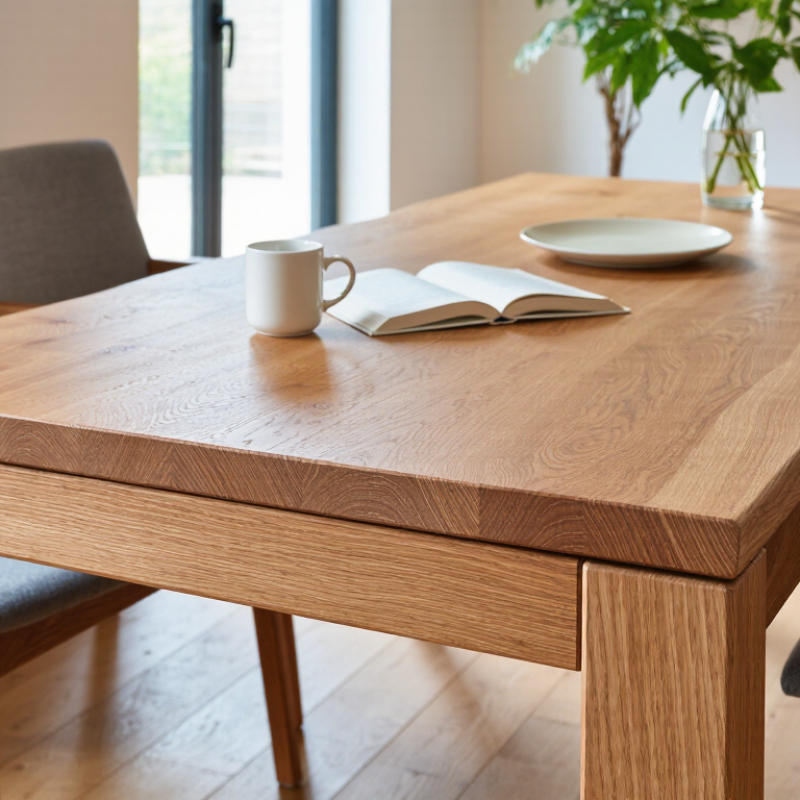
Choosing a solid oak table top starts with understanding what “grade” actually measures. NHLA hardwood grading rules define FAS lumber as having at least 83 1/3% clear-face yield. No. 1 Common allows about 66 2/3%, while No. 2A Common allows 50%. These grades describe usable clear wood, not guaranteed stability, color, or beauty.
Look closely at the board’s source and structure. White oak and red oak differ in grain, pore pattern, and moisture behavior. The USDA Forest Products Laboratory’s Wood Handbook notes that interior wood often reaches 6–8% moisture content in conditioned buildings. Ask the supplier for a moisture reading near that range.
A wide top assembled from narrower boards may be more stable than one dramatic, uninterrupted slab. Watch for end checks, loose knots, filled splits, and uneven cupping under strong side light.
Experience matters here. I once trusted a flawless surface and overlooked a slightly damp underside. It moved after installation. A beautiful top can still fail its room.
Check whether boards are kiln-dried, acclimated, and joined with alternating growth-ring orientation. Confirm the top’s thickness and support spacing, too. Dense oak feels reassuring, but excessive weight can stress weak frames.
The Wood Handbook also explains that tangential movement is generally greater than radial movement, so seasonal width changes deserve attention. Small imperfections may add character, yet large defects near screw holes deserve caution.
Grade labels help, but they never replace careful inspection.
10 Tips for Choosing a Solid Oak Table Top
Choosing the right tabletop size starts with real use, not appearance. Allow roughly 600 millimetres of width per diner for comfortable elbow space. A four-person rectangular top often works well at 1200 by 800 millimetres. For six people, 1800 by 900 millimetres provides better serving space. Leave at least 900 millimetres around the table for chairs and walking paths. Measure twice.
Thickness affects strength, visual weight, and stability. A 25–30 millimetre top suits many dining tables with properly positioned supports. Larger tops, heavy benches, or wide unsupported spans may need 35–40 millimetres. The USDA Forest Products Laboratory’s Wood Handbook reports white oak shrinkage of about 10.5% tangentially and 5.6% radially. That difference matters. Use elongated fastener holes or tabletop clips, allowing seasonal movement across the grain. Rigidly fixing the panel can cause splitting or cupping.
The Architectural Woodwork Standards also emphasise moisture control and suitable joinery for solid wood components. Keep the tabletop indoors before installation, especially after delivery from a colder warehouse. I once selected a thick top mainly for its appearance. It looked impressive, but its overhanging edges made the base feel unstable. That choice needed more thought. Check the base width, support spacing, and intended load before ordering. A beautiful 2400-millimetre top may overwhelm a small room, while a narrow 700-millimetre surface can make shared meals feel cramped.
10 Tips for Choosing a Solid Oak Table Top
Evaluating Moisture Content, Grain, and Surface Finish
A solid oak table top should feel dry, stable, and carefully prepared. Use a moisture meter across several areas, not just the center. Read the edges and underside too. Oak often shows different readings near end grain. A practical target is usually 6% to 10% indoors, but local conditions matter. Let the top acclimate in its final room for several days. Keep it flat, supported, and away from radiators. Wood still moves. I learned that the hard way.
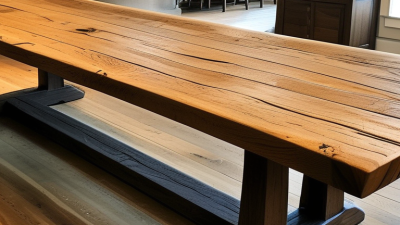
Study the grain under natural light. Straight, continuous grain often suggests steady cutting and a calmer appearance. Attractive knots can add character, but loose knots may collect dirt or weaken the surface. Check for cracks, raised fibers, twisting, and uneven edges. Run your hand across the top. It should feel smooth, not slippery from excessive coating. Grain direction also affects visual balance, especially on wide tops. Small details matter.
Surface finish deserves a close inspection. Oil can create a warm, tactile feel and may allow local repairs. Film finishes usually offer stronger resistance to spills, but scratches can be more noticeable. Ask how many coats were applied and whether the finish was cured fully. Test a hidden area with a damp cloth first. Never assume a perfect sample reflects daily use. A glass ring may still appear. Wipe spills promptly, use coasters, and reassess the finish after a season of real household use.
| Tip | Evaluation Dimension | Practical Benchmark | How to Check | Why It Matters |
|---|---|---|---|---|
| 1 | Moisture Content | For a typical heated indoor room, approximately 6%–8% is commonly suitable; buildings with higher seasonal humidity may require a different target. | Use a calibrated wood moisture meter on several areas and compare the readings with the room’s normal humidity conditions. | Wood that is too wet may shrink after installation, while very dry wood can expand when exposed to moisture. |
| 2 | Moisture Uniformity | Readings across the top should be reasonably consistent, without isolated areas showing a clear moisture difference. | Measure the center, edges, ends, and underside rather than relying on a single reading. | Uneven moisture can lead to localized cupping, bowing, joint movement, or cracking. |
| 3 | Board Construction | Confirm that the top is made from solid oak boards rather than oak veneer over a composite core. | Ask for the material specification and inspect exposed edges, end grain, and the underside. | Construction affects repairability, movement, weight, durability, and long-term appearance. |
| 4 | Grain Direction | Longitudinal grain should generally run along the length of each board, with no unexpected cross-grain defects in load-bearing areas. | View the top in natural or raking light and follow the grain from one end to the other. | Grain direction influences visual continuity, machining quality, and the way the wood responds to movement. |
| 5 | Grain Character | Choose between clear, uniform grain and more characterful grain with knots, mineral streaks, or color variation according to the intended style. | Inspect the entire surface, not just a sample corner, and confirm whether knots are filled, open, or structurally repaired. | Natural variation is normal in oak, but the acceptable level depends on design preference and maintenance expectations. |
| 6 | Flatness and Stability | The top should sit flat without obvious cupping, twisting, or bowing; minor natural movement should be distinguished from a visible defect. | Place a straightedge across the length and width, and check that the underside is not showing stress or distortion. | A stable top is easier to install and less likely to rock, separate at joints, or develop uneven wear. |
| 7 | Thickness and Edge Profile | Common solid oak table-top thicknesses are about 20–40 mm, depending on span, support design, and visual requirements. | Measure the thickness at several points and inspect whether the edge is square, eased, chamfered, or shaped consistently. | Thickness contributes to stiffness and appearance, while a softened edge improves comfort and reduces sharp corners. |
| 8 | Surface Preparation | The surface should feel uniformly smooth, with no obvious sanding scratches, raised fibers, glue marks, or uneven transitions. | Run a clean hand lightly across the surface and inspect it under angled light before finishing is applied. | Poor preparation remains visible through many finishes and can make cleaning and refinishing more difficult. |
| 9 | Surface Finish Type | Hardwax oil gives a natural, repairable feel; polyurethane or lacquer generally provides a tougher film-forming barrier; penetrating oils offer a softer protective layer. | Request the finish type, sheen level, care instructions, and a sample showing the actual color and texture. | Finish choice affects stain resistance, tactile feel, repair method, sheen, and ongoing maintenance. |
| 10 | Finish Coverage and Care | All accessible faces, including the underside and edges, should receive an appropriate and reasonably consistent level of protection. | Check for missed areas, lap marks, drips, uneven sheen, and clear instructions for spills, heat, humidity, and refinishing. | Balanced protection helps reduce uneven moisture exchange and extends the service life of the table top. |
Choosing a solid oak table top starts with the room, not the catalog. Measure the available floor space and leave at least 90 centimetres for comfortable movement. A large top can overwhelm a narrow dining area. A small top may look lost in an open-plan room.
Leave breathing room.
Match the top’s shape to the room and base. Rectangular tops suit long rooms and paired-leg bases. Round tops improve conversation and work well in compact spaces. Check that the base supports the top evenly, especially near the corners. For a 180-centimetre top, a base that is too narrow can feel unstable and look visually unbalanced. I also check knee clearance before choosing the final height. About 72 to 75 centimetres usually feels practical, but chair design can change that experience.
Think beyond colour. Warm oak tones can soften white walls, while a lighter finish keeps darker rooms feeling open. Existing floors matter, too. Similar wood tones may blend beautifully, or they may look accidentally mismatched. Bring a flooring sample into daylight before deciding. Oak naturally includes knots, grain changes, and small colour differences. That character is useful, although I once selected a top with stronger grain than the room could handle. It taught me to judge samples in place, not under showroom lighting. Consider the base material as well: black metal adds contrast, while timber creates a quieter, more continuous look.
Use the chart as a practical planning guide. The tabletop lengths reflect common furniture dimensions, while the minimum room length assumes approximately 90 cm of circulation space at each end.
For a comfortable layout, choose a tabletop that leaves enough clearance around the base and seating positions. Pedestal bases work well in compact rooms, trestle bases suit longer tops, and four-leg bases are most practical when the tabletop length and leg placement are carefully matched. Always confirm the base load rating and allow for the substantial weight of solid oak.
10 Tips for Choosing a Solid Oak Table Top
After inspecting oak furniture in workshops and homes, I look beyond appearance. A reliable top should feel dense, stable, and properly dried. Check the wood’s moisture content before buying. Kiln-dried oak usually reduces later movement, although it cannot prevent every change. Examine the grain direction, board joins, and thickness. Wider boards look impressive but may react more noticeably to humidity. A tight, well-made joint matters more than a flawless surface. Run your hand across the top. Small natural knots are acceptable, but deep cracks need careful assessment.
Maintenance affects real durability. Choose a finish that suits daily use, especially around coffee, water, and hot dishes. Oil can create a warm, repairable surface, while varnish offers stronger resistance against spills. Neither option is maintenance-free. Wipe moisture quickly, use coasters, and avoid placing hot pans directly on the oak. Keep the table away from radiators and strong sunlight when possible. I once ignored a small water ring, and it became a stubborn pale mark.
Overall value depends on lifespan, repairability, and construction, not just price. Compare the top’s thickness, support system, finish quality, and warranty terms. Ask whether the wood comes from a responsibly managed source. A heavy top can still warp if its base restricts natural movement. That detail is easy to miss. Consider future sanding costs too. Paying slightly more for stable wood and skilled joinery may reduce replacements, but expensive does not always mean better.