China Top 10 Solid Wood Drawer Manufacturers
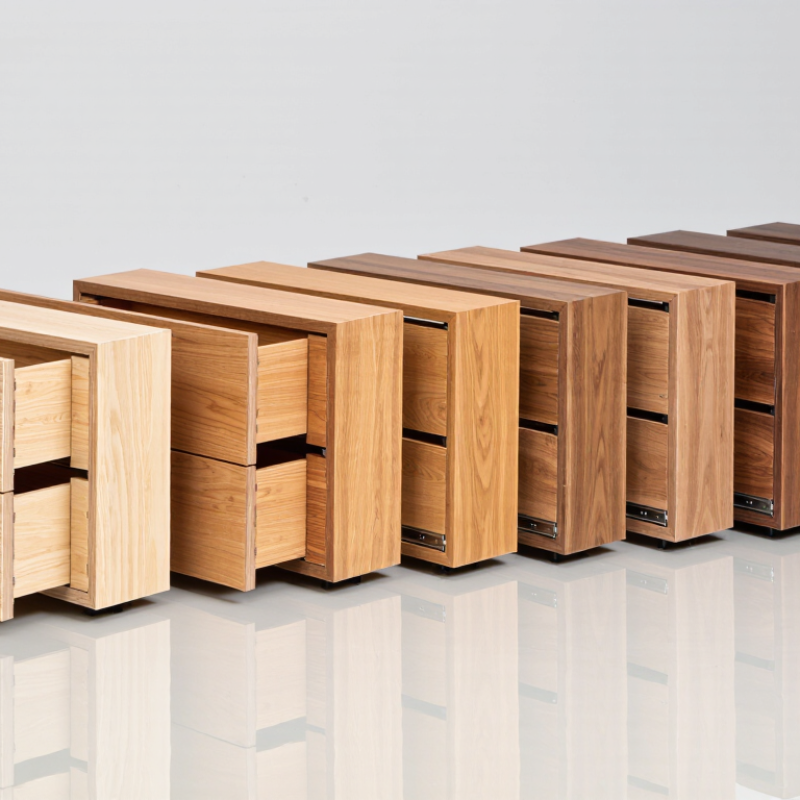
Choosing the right Solid Wood Drawers manufacturer in China requires more than comparing photographs or quoted prices. Wood species, moisture control, joinery, finishing, hardware, and production consistency deserve close attention. A drawer made from ash, oak, or walnut should feel stable, balanced, and precise in daily use. Its dovetail joints should remain tight after repeated opening. Its surface should show the grain, not conceal poor sanding.
Charles Eames, a respected furniture designer, once said, “The details are not the details. They make the design.” This principle remains highly relevant to Solid Wood Drawers. Small details, including concealed runners, smooth edges, panel thickness, and accurate dimensions, often separate a dependable supplier from a merely attractive one.
This guide introduces China’s top 10 Solid Wood Drawers manufacturers through practical purchasing criteria. These include factory experience, customization capability, material traceability, quality inspection, export performance, and communication reliability. Certifications may support confidence, but they do not replace sample testing or factory verification. A beautiful catalog can mislead.
No ranking is perfect.
Some manufacturers excel at handcrafted walnut drawers but lack large-volume capacity. Others provide efficient pricing while offering fewer finishing options. Buyers should compare samples under real conditions, including weight, humidity, and repeated use. We also acknowledge a limitation: public information about Chinese factories can change quickly. Therefore, this list should support careful research, not replace it. The strongest decision usually combines verified production evidence, clear specifications, and an honest discussion about weaknesses.
What Defines a Top Solid Wood Drawer Manufacturer in China
A top solid wood drawer manufacturer in China is defined by verified control, not catalogue size. Experienced factories inspect timber moisture before machining. They usually target about 8–12%, adjusted for the destination climate. This reduces warping, joint opening, and seasonal sticking. Skilled teams also check grain direction, drawer squareness, runner alignment, and surface consistency by hand. Small details matter.
Material transparency is equally important. The FAO’s Global Forest Resources Assessment 2020 reported 420 million hectares of forest lost worldwide between 1990 and 2020. Therefore, responsible manufacturers should provide species identification, legal-source documents, and traceable timber records. FSC’s 2023 facts and figures report covered more than 200 million certified forest hectares globally. Certification helps, but it does not replace factory-level inspection. A supplier should also disclose coating specifications and formaldehyde test results.
Reliable production needs measurable systems. The ISO Survey 2022 recorded more than 1.2 million ISO 9001 certificates worldwide, yet certification alone cannot prove drawer quality. Buyers should request batch records, dimensional reports, load tests, and repeated opening-cycle results. Independent laboratories add credibility. In practice, I would inspect unfinished joints, not only polished samples. Samples can hide weaknesses. Even strong factories may struggle with unusual wood species or rapid design changes. That limitation deserves honest discussion before mass production.
Key Materials and Construction Standards for Solid Wood Drawers
When evaluating China’s top solid wood drawer manufacturers, inspect materials before comparing prices. Reliable drawers usually use kiln-dried hardwood, such as rubberwood, beech, oak, or ash. Moisture content should commonly remain near 8–12%, depending on the destination climate. Excess moisture may cause swelling, while overly dry timber can split.
Look closely at the grain, knots, and edge treatment. A strong drawer often uses dovetail or reinforced mortise-and-tenon joints. These joints should fit tightly, without visible gaps or excess glue. The drawer bottom needs stable plywood or solid wood support, seated in a proper groove. Thin panels may reduce cost, but they can sag under daily loads. Smooth sanding matters too. Rough corners often reveal rushed production. Finishes should be low-emission, evenly applied, and resistant to household moisture.
Tips:
Ask for moisture readings, joint samples, load tests, and finish specifications. Request production photos, not only polished catalog images. Check whether dimensions remain consistent across several samples. A single perfect drawer proves little. I would also test opening cycles with a loaded drawer, because attractive construction can still hide weak runners. Manufacturers should explain their inspection process clearly and provide traceable quality records. Some specifications may need adjustment after climate testing. That is not failure; it shows the design is being reviewed honestly.
Profiles of China’s Ten Leading Solid Wood Drawer Manufacturers
China’s leading solid wood drawer manufacturers differ in scale, equipment, and wood expertise. These profiles focus on practical strengths, not promotional claims.
A Guangdong manufacturer works mainly with rubberwood and beech. Its technicians check moisture levels before cutting and use computer-controlled dovetail joints. A Jiangsu producer specializes in oak drawer boxes for kitchens and wardrobes. Its factory combines kiln drying with hand sanding around corners. A Zhejiang workshop serves custom furniture makers. It adjusts drawer dimensions in small batches, though this flexibility can slow delivery. A Shandong manufacturer focuses on pine and ash products. It uses water-based finishes and tests surface adhesion under controlled conditions.
A Fujian producer supplies unfinished drawer components. Buyers can apply their preferred coating later. An Anhui factory emphasizes laminated solid wood panels. This reduces warping, but edge matching still requires careful inspection. A Sichuan manufacturer builds heavy-duty drawers for storage furniture. Its reinforced bottoms support higher loads, although thicker parts increase overall weight. A Hebei supplier combines solid wood fronts with engineered internal structures. This practical design can improve stability and control costs.
An Hubei manufacturer produces small wooden drawers for bedroom furniture. Its quality team checks grain direction, joint gaps, and sliding resistance by hand. A Liaoning factory serves export-oriented orders with documented inspections and packaging tests. It records wood batches, finish samples, and carton drop results. These manufacturers show different forms of expertise. Still, no factory is flawless. Seasonal humidity, wood variation, and communication errors can affect results. Buyers should request samples, moisture records, joint specifications, and clear acceptance standards before placing larger orders.
Manufacturing Capabilities, Customization, and Quality Control
China’s top 10 solid wood drawer manufacturers should be judged beyond catalog photos. Manufacturing capability begins with kiln-dried timber, stable moisture control, and accurate machining.
The FAO Global Forest Resources Assessment 2020 reports 420 million hectares of forest loss since 1990. Responsible factories therefore document timber origin and reduce material waste.
CNC cutting, concealed dovetail joints, and automated sanding improve repeatability. Skilled workers still matter.
Customization separates capable suppliers from simple workshops.
Buyers may request drawer widths, soft-close systems, interior dividers, wood species, stains, and edge profiles. A reliable manufacturer converts drawings into production samples before mass production.
Tolerances should be measured with calibrated gauges, not visual judgment. Small details matter.
A 0.5-millimeter mismatch can affect cabinet alignment.
Quality control should cover every stage.
Incoming wood is checked for moisture, knots, warping, and color variation. During assembly, inspectors test joint strength, runner alignment, and opening cycles. Final checks should include surface defects, dimensions, packaging, and odor.
ISO’s Survey of Certifications 2023 shows ISO 9001 remains widely adopted worldwide, but certification alone cannot prove consistent drawer quality.
That is an uncomfortable point.
Factory audits, batch records, and independent inspections provide stronger evidence. Some manufacturers still depend too heavily on manual inspection, which can miss repeated defects. Suppliers should review failure data and improve processes continuously.
How to Compare Suppliers for Your Solid Wood Drawer Project
China Top 10 Solid Wood Drawer Manufacturers
When comparing suppliers for a solid wood drawer project, begin with the material, not the catalog photos. Ask for the exact wood species, grade, moisture range, and board thickness. A reliable manufacturer should provide clear answers and recent production samples. I would also check finger joints, dovetail accuracy, drawer-bottom support, and sanding quality. Small gaps often become obvious after installation.
Request a sample drawer built to your actual dimensions. Test its movement with the proposed slides and load it with realistic weight. Measure the front alignment, side clearance, and finish consistency under strong light. Ask whether the factory controls moisture before machining. Wood that is too wet may shrink later. Wood that is too dry can split. This detail matters.
Compare the top 10 candidates through a simple supplier scorecard. Include sample quality, engineering support, monthly capacity, inspection procedures, packaging, lead time, and response speed. Request photos or records from recent inspections, but do not rely on photos alone. A factory video can look impressive. It proves little. Clarify replacement policies for warped parts, damaged cartons, and color variation. Also review payment terms and production milestones in writing. In my experience, the cheapest quotation rarely remains cheapest after revisions. I still sometimes overvalue polished communication. That is worth questioning. A dependable supplier explains limitations early and accepts reasonable technical challenges.
China Top 10 Solid Wood Drawer Manufacturers: Material Benchmark for Supplier Comparison
Janka hardness is a measurable benchmark for comparing the dent and wear resistance of solid wood drawer components. Higher values generally indicate better resistance to surface indentation, while final supplier selection should also verify moisture control, joinery, finish quality, lead time, and certifications.
Data source: USDA Forest Products Laboratory, Wood Handbook. Values are representative Janka hardness ratings in pounds-force (lbf) and are provided as material benchmarks rather than company-specific performance claims.


 +8618702197143