Why Choose a Solid Wood Bar Cabinet?
A Solid Wood Bar Cabinet brings warmth, structure, and lasting character into a dining room or entertaining space. Unlike thin composite panels, solid timber shows real grain, subtle color changes, and small marks formed during growth. Each door can feel slightly different. That difference is valuable.
George Nakashima, the renowned furniture maker and woodworker, said, “The best way to use wood is to let it speak for itself.” His principle explains why material choice matters. A well-made Solid Wood Bar Cabinet should not hide its oak, walnut, or mahogany character beneath excessive decoration. Its grain should guide the design.
Practical experience also matters. A cabinet must support bottles, glassware, and serving tools without feeling unstable. Strong hinges, accurate joinery, adjustable shelves, and a moisture-resistant finish deserve close attention. Soft-close doors are useful, but they cannot repair weak construction. The details matter.
Solid wood is not perfect. It can expand, contract, and develop small surface changes as seasons shift. That is the compromise. However, proper kiln-dried timber and sensible indoor placement reduce these concerns. Avoid direct sunlight and damp walls. Wipe spills quickly.
For buyers, the strongest choice combines honest materials, skilled craftsmanship, responsible sourcing, and a design suited to daily use. A beautiful cabinet may attract attention. A dependable one earns it over time.
What Defines a Solid Wood Bar Cabinet?
Why Choose a Solid Wood Bar Cabinet?
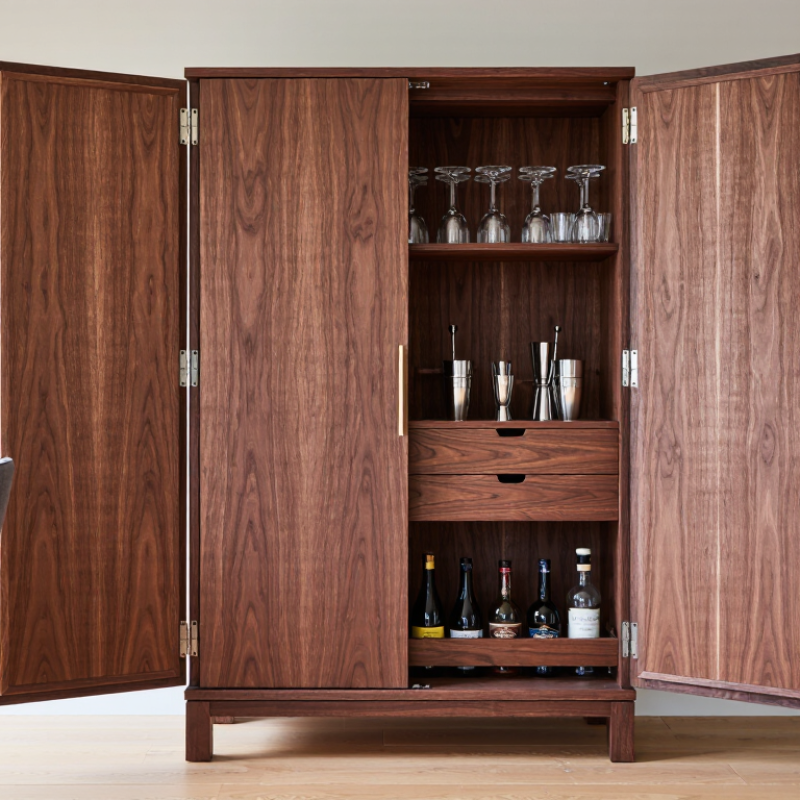
A solid wood bar cabinet is defined by more than a rich brown finish. Its main panels, doors, shelves, and frame use natural wood, rather than veneer over fiberboard. Inspect an exposed edge. Continuous grain and small seasonal movement offer useful clues. Joinery also matters. Dovetails, mortise-and-tenon joints, and reinforced dowels can indicate careful construction. They do not guarantee perfection. Poor moisture control can still cause warping. The USDA Forest Products Laboratory’s Wood Handbook explains that wood exchanges moisture with indoor air. Many interior environments keep wood near 6–8% moisture content, though local conditions vary.
Practical quality appears under daily pressure. A solid shelf should support bottles without sagging, while a stable door should close without scraping. I would not treat weight alone as proof of quality. That assumption is convenient, but weak. Look for the wood species, panel thickness, finish type, and moisture information in the specification. These details make comparisons more reliable. The Food and Agriculture Organization’s Global Forest Resources Assessment 2020 reports that forests cover about 31% of global land area. Responsible sourcing therefore deserves attention, not just appearance. Documentation from recognized forestry systems can help verify origin and management claims. Still, paperwork cannot replace inspection. Tiny knots, color variation, and uneven grain may appear. Those marks are natural, but they should be disclosed rather than hidden. A well-defined cabinet combines authentic wood, sound construction, controlled moisture, and transparent material information.
Why Choose a Solid Wood Bar Cabinet?
What Defines a Solid Wood Bar Cabinet?
Solid wood bar cabinets are made primarily from natural wood boards rather than a wood veneer applied over composite panels. The chart compares typical Janka hardness values for common furniture woods, measured in pounds-force (lbf). Higher hardness generally indicates greater resistance to dents and surface wear, although cabinet quality also depends on construction, finish, joinery, and maintenance.
Reference: Typical Janka hardness values reported in the USDA Forest Products Laboratory Wood Handbook and standard wood-species references. Actual values vary by species, growth conditions, and moisture content.
How Solid Wood Enhances Durability and Longevity
Why Choose a Solid Wood Bar Cabinet?
How Solid Wood Enhances Durability and Longevity
A solid wood bar cabinet is built for repeated use, not occasional display. Dense hardwood can support heavy bottles, glassware, and serving tools without feeling unstable. Properly joined panels also resist loosening better than many thin, composite materials. The cabinet may develop small marks over time. That is not always a flaw. Those marks can record years of shared meals and celebrations.
Wood also responds to its surroundings. Stable indoor humidity helps reduce warping, splitting, and joint movement. A quality protective finish limits damage from brief spills, while rounded edges reduce daily impact. However, solid wood is not maintenance-free. Direct sunlight may change its color, and standing moisture can still leave stains. Reliable construction matters as much as the wood species itself.
Tips: Keep bottles upright, wipe spills quickly, and place the cabinet away from heaters. Use coasters beneath wet glasses. Check hinges and handles every few months. If the finish looks dry, follow the maker’s care instructions instead of applying a random polish. A little care helps preserve strength, although some natural aging is unavoidable.
Design Options for Different Interior Styles
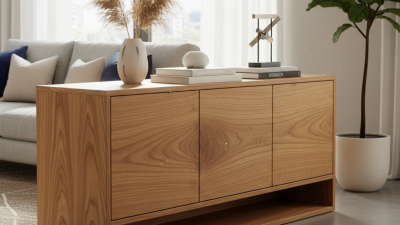
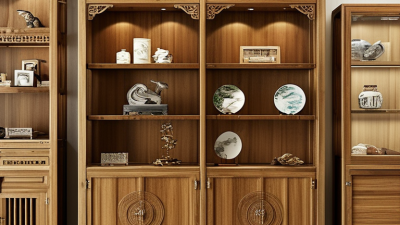
A solid wood bar cabinet can suit far more than a traditional dining room. Its design language depends on proportion, finish, hardware, and visual weight. In practice, a slim cabinet with flat doors suits modern interiors, especially beside a low sofa or black metal shelving. Light oak, recessed handles, and visible grain support Japandi spaces. For farmhouse rooms, try thicker frames, warmer stains, and simple iron pulls. Traditional interiors benefit from raised panels, crown details, and deeper walnut tones.
Material choice also reflects wider furniture preferences. Grand View Research valued the global furniture market at 516.66 billion dollars in 2022, with projected growth of 5.2% annually through 2030. The figure suggests continued demand for considered home pieces, not disposable decoration. The 2024 Design Trends report from the National Kitchen and Bath Association also highlights natural materials and warm wood tones. That evidence supports solid wood’s visual relevance, although market growth does not guarantee good design.
Measure the wall first. A cabinet that blocks a doorway quickly becomes an expensive mistake. Leave space for door swing and comfortable movement. A matte finish hides fingerprints better than high gloss, but it may show dust. That trade-off matters. I would not force one style into every room. Even beautiful grain can feel heavy beside ornate furniture. Sample the stain near daylight, evening lamps, and existing flooring. Color changes more than many showroom photographs suggest.


 +8618702197143