+8618702197143
Leave Your Message
Choosing the best Solid Wood Drawers in 2026 takes more than comparing attractive photos or wood names. A drawer may look substantial yet use thin panels, weak joints, or a finish that scratches easily. This guide considers the details that affect daily use: wood species, panel thickness, joinery, drawer slides, finish, storage capacity, and price. Details matter.
Solid wood can bring warmth, repairability, and a distinctive grain pattern, but it is not automatically the right choice for every room or budget. Wood responds to changes in humidity, and natural variation means two drawers may not look identical. That is part of the appeal. It can also be inconvenient. We’ll distinguish solid-wood construction from products that combine solid fronts with plywood or engineered panels, since those designs can perform well but should be described clearly. The comparisons focus on useful product information and practical buying checks, rather than treating a premium price as proof of quality. Before choosing, consider what you will store, how often the drawers will open, and whether the dimensions fit your space. A careful look at construction and care requirements can prevent an expensive mismatch. Even with a thorough checklist, some trade-offs remain. The best option depends on your room, habits, and expectations.
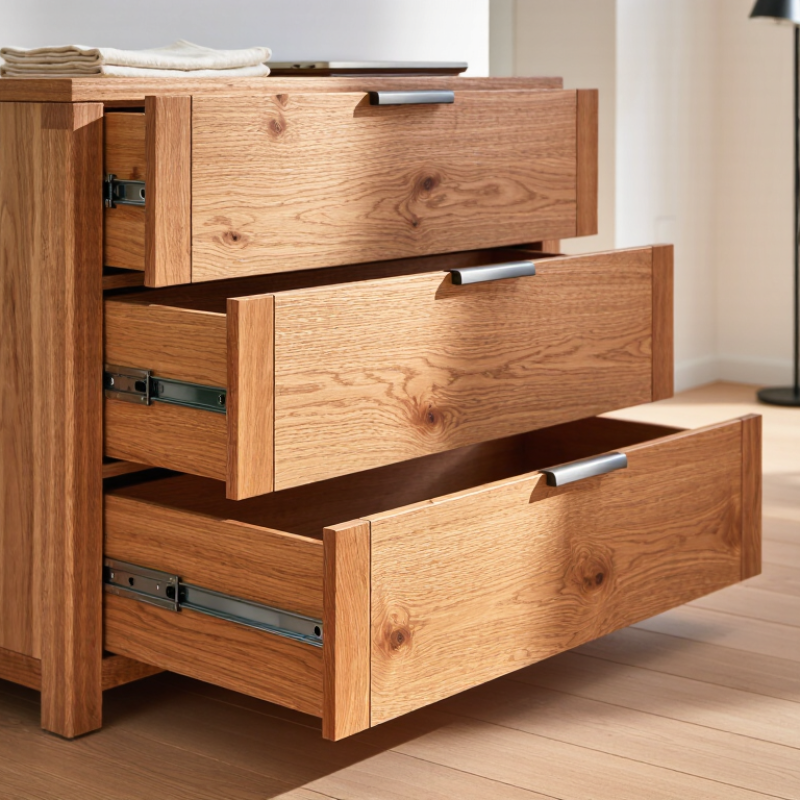
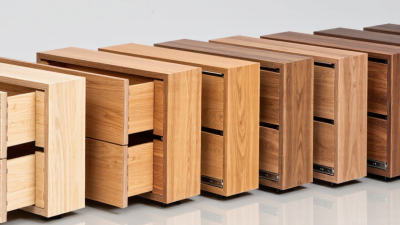
A solid-wood drawer is made with solid lumber in its main box parts, usually the front, sides, and back. That is different from a wood veneer bonded to particleboard or another composite core. The distinction matters, but “solid wood” does not always mean every piece is solid lumber. Drawer bottoms are often plywood or hardboard, which can stay flatter across changing humidity. Check the whole box, not just the visible front. Small details count.
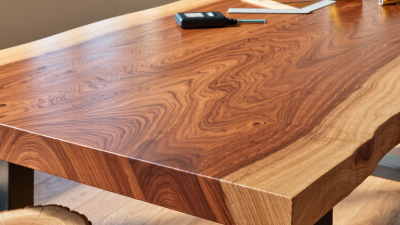
Species affect weight, grain, and wear. Oak has pronounced grain and generally handles everyday knocks well. Maple is often pale, close-grained, and firm; its surface can show dents less readily than softer woods. Cherry darkens with light and time, so a drawer may deepen in color after years of use. These are tendencies, not guarantees. Finish, board quality, and care also shape how wood ages.
Construction tells you whether the parts work well together. Dovetail joints interlock at the corners, while finger joints or well-fitted dado joints can also make sturdy boxes. Look for tight connections without large gaps or glue squeeze-out. The bottom should sit securely in its groove rather than sag under ordinary contents. Feel the drawer move. Binding or a rough scrape may point to poor alignment, though seasonal wood movement can also affect fit. Even careful craftsmanship has limits; solid wood can shift as indoor moisture changes.
| Category | Part or wood species | Typical construction or measured property | Practical considerations |
|---|---|---|---|
| Definition | Solid-wood drawer box | The sides, front, and back are made from solid lumber rather than wood-based particleboard or fiberboard. The bottom may be solid wood or a panel product, so check the specification. | “Solid wood” describes the material, not a particular joint, wood species, or drawer-slide system. |
| Drawer part | Sides | Usually solid boards; their thickness and height affect box rigidity and usable interior space. | Check that the sides are solid lumber if that is a requirement; a wood-look surface alone does not establish the core material. |
| Drawer part | Front and back | Solid boards are commonly joined to the sides with dovetails, box joints, dowels, or other joinery. | Inspect joint fit and alignment. Joint type alone does not determine overall quality; material, workmanship, and intended load also matter. |
| Drawer part | Bottom panel | May be solid wood or plywood, commonly fitted into grooves in the drawer sides and ends. | Ask whether the bottom is solid wood, plywood, or another panel, and how it is supported. A grooved, well-supported bottom can help keep the panel seated. |
| Construction | Dovetail joint | Wedge-shaped pins and tails interlock at a corner. | The interlocking shape helps resist the sides being pulled away from the front or back. Examine the fit and workmanship rather than relying on the joint name alone. |
| Construction | Dado or groove | A channel cut into a board can receive a drawer bottom or another panel. | Check that the bottom is captured and adequately supported for the drawer’s intended contents. |
| Wood species | Hard maple (Acer saccharum) | Janka hardness: approximately 1,450 lbf. | A hard, close-grained hardwood often selected for wear resistance. Its pale color can make dirt or marks more visible. |
| Wood species | White oak (Quercus alba) | Janka hardness: approximately 1,360 lbf. | A strong hardwood with a pronounced grain pattern. Its appearance is more prominent than that of many fine-grained species. |
| Wood species | Yellow birch (Betula alleghaniensis) | Janka hardness: approximately 1,260 lbf. | A relatively hard, fine-grained option that is often visually quieter than oak. |
| Wood species | Black walnut (Juglans nigra) | Janka hardness: approximately 1,010 lbf. | Known for naturally dark heartwood and varied grain; color and figure can differ from board to board. |
| Wood species | Black cherry (Prunus serotina) | Janka hardness: approximately 950 lbf. | A fine-grained hardwood whose color typically deepens with exposure to light over time. |
| Wood species | Yellow-poplar (Liriodendron tulipifera) | Janka hardness: approximately 540 lbf. | Easier to machine than harder species, but its lower hardness makes it more susceptible to dents and wear. |
| Selection guide | Choosing a drawer | Compare the specified species, box-part materials, corner joinery, bottom construction, dimensions, and slide compatibility. | Janka figures are approximate species-level reference values; actual boards vary. Match the drawer’s construction to its size, use, and expected contents. |
Note: Janka hardness values are approximate pounds-force (lbf) for the listed species; natural variation occurs within each species.