Leave Your Message

Why Choose Wooden Display Cabinets for Your Store?

Why Choose Wooden Display Cabinets for Your Store?

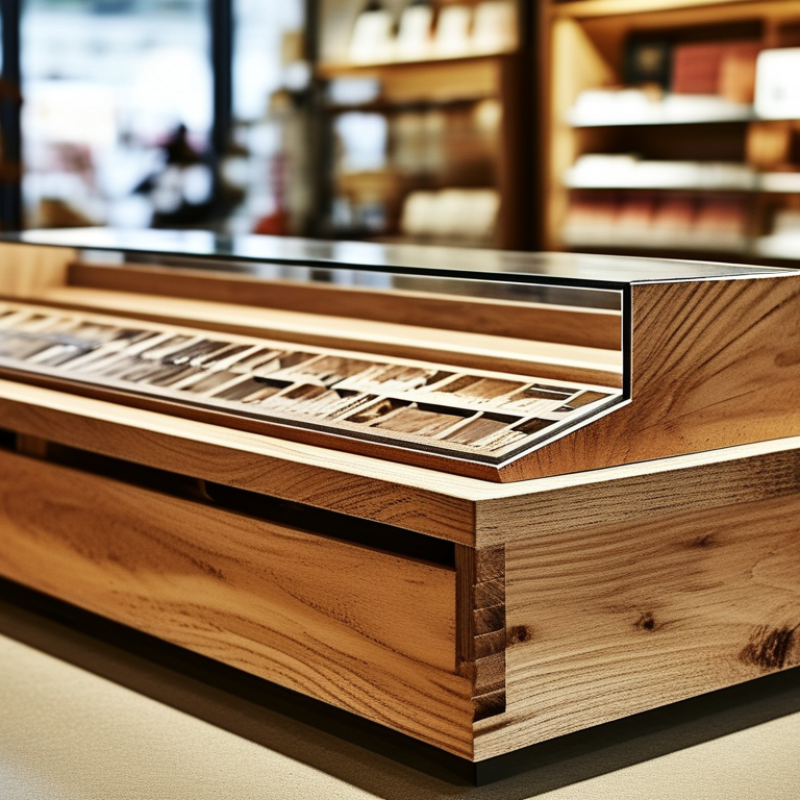
A store has only seconds to earn attention. The right fixture can turn browsing into meaningful engagement. Wooden Display Cabinets offer warmth, structure, and a tactile shopping experience that metal or plastic units may not provide. Customers can see the grain, feel the solid edges, and understand where premium products belong.

POPAI’s 2014 Mass Merchant Shopper Engagement Study reported that 82% of purchase decisions happened inside the store. That finding remains useful, although it should not be treated as a universal rule. Product category, location, pricing, and staff service still influence the result. Retail design expert Paco Underhill wrote, “The first step in selling is getting the customer to stop.” A well-positioned wooden cabinet supports that first pause. It can frame cosmetics, watches, books, food, or specialist merchandise at eye level.

The details matter. A dark oak finish may strengthen a luxury presentation. Light birch can make a small shop feel more open. Adjustable shelves improve flexibility, while concealed storage keeps the counter clear. Small choices matter.

Wood is not automatically the greener choice. Its value depends on certified sourcing, durable construction, repairability, and responsible disposal. The U.S. Environmental Protection Agency advises considering product life cycle impacts rather than focusing on one material alone. That is a useful caution.

In practice, the best cabinet is not simply the most attractive one. It must withstand daily handling, suit the brand, protect products, and support comfortable movement. A beautiful fixture can still fail if customers cannot reach the merchandise. That weakness deserves honest review.
Why Choose Wooden Display Cabinets for Your Store?

Material Basics: USDA Wood Handbook Data on Density, Strength, and Stability

Why Choose Wooden Display Cabinets for Your Store?

Material Basics: USDA Wood Handbook Data on Density, Strength, and Stability

Wooden display cabinets offer more than a warm appearance. Their material performance depends on species, moisture content, grain direction, and construction quality. Data in the USDA Wood Handbook shows that common commercial woods can range from roughly 300 to 800 kilograms per cubic meter. Denser wood usually resists dents better, but density alone does not guarantee durability. Grain defects, joints, and panel thickness also affect performance.

Strength is measured through properties such as modulus of rupture and compression parallel to the grain. These figures help predict how shelves handle books, ceramics, or folded clothing. A dense shelf may still sag if its span is too wide. I have seen attractive cabinets fail because the design trusted weight instead of support spacing. That mistake is easy to repeat.

Stability deserves equal attention. Wood changes size as indoor humidity rises and falls. USDA research commonly reports greater tangential shrinkage than radial shrinkage, often around twice as much, although species vary. A cabinet near a sunny window may develop tight doors, visible joints, or slight panel movement. Sealed surfaces slow moisture exchange, but they do not stop it. Stable joinery, balanced panels, and sensible humidity control matter more than a thick finish. Small seasonal gaps can be acceptable. They may also reveal weak detailing.

Retail Design: Store Atmosphere Research on Natural Materials and Shopper Response

Why Choose Wooden Display Cabinets for Your Store?

Retail Design: Store Atmosphere Research on Natural Materials and Shopper Response

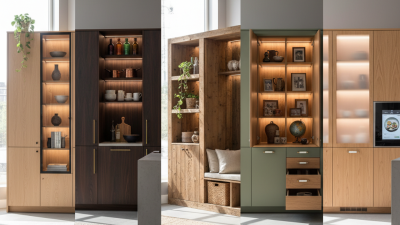
Wooden display cabinets can change how shoppers read a store.

In retail observations, natural grain often makes product areas feel warmer and less institutional. That response is not magic. It develops through lighting, spacing, texture, and maintenance. A pale oak-toned cabinet beside soft light may encourage slower browsing. Dark wood can create focus, but it may also make a small shop feel heavy. This difference matters.

Research on natural materials commonly links visible wood with comfort, perceived quality, and longer attention. However, shopper response depends on context, culture, product type, and personal taste.

A practical test is tracking dwell time, touch interactions, and questions near the cabinet. These observations are more useful than assuming every customer wants a rustic atmosphere.

Wood also supports tactile storytelling. A slightly uneven grain can make a display feel honest, not manufactured. Yet poor finishing, sharp edges, or dusty shelves quickly damage trust.

Good retail design treats the cabinet as part of a wider sensory system.

Use durable finishes, stable joinery, and surfaces that staff can clean consistently. Keep sightlines open, so warmth never becomes visual clutter. I have seen attractive timber fixtures underperform when products were crowded together. That is a useful warning. Natural materials need measurement, not just admiration. Review sales patterns, customer comments, and cabinet wear over time. The design may need revision.

Durability: BIFMA Performance Standards for Retail Cabinet Loads and Safety

Why Choose Wooden Display Cabinets for Your Store?

Wooden display cabinets offer warmth, rigidity, and repairable surfaces. However, appearance cannot prove structural safety. In practical store fit-outs, the weak point is often overlooked: overloaded shelves, loose hinges, or an unstable base. ANSI/BIFMA X5.9-2019, the Storage Units standard, evaluates performance through load, durability, door, drawer, and stability tests. It does not provide one universal retail shelf-load figure. The correct capacity depends on cabinet size, material thickness, hardware, and installation.

That distinction matters. A cabinet holding glass jars needs different testing from one holding lightweight clothing. Use distributed loads, not concentrated piles. Check deflection after loading. Inspect screw joints and shelf supports. Anchor tall units to the wall where appropriate. The U.S. Consumer Product Safety Commission’s 2018–2020 furniture tip-over report estimated 71,300 emergency-department injuries across three years. The figure covers furniture incidents broadly, but it shows why stability deserves attention.

Wood performs well when moisture is controlled and panels are properly sealed. Poorly protected edges can swell after routine floor cleaning. That detail is easy to miss. Request documented test methods, load assumptions, and installation instructions from the manufacturer. Treat BIFMA compliance as evidence of tested performance, not a substitute for site assessment. Standards help, but they cannot correct careless assembly or uneven flooring. I would also retest after relocating a cabinet, because a safe setup can become unsafe.

Why Choose Wooden Display Cabinets for Your Store? - Durability: BIFMA Performance Standards for Retail Cabinet Loads and Safety
Performance Dimension Recommended Cabinet Specification Reference Value Why It Matters in Retail Use Verification Method
Shelf load capacity Declare a uniform distributed load for every shelf and avoid exceeding the declared capacity during merchandising. 25 kg per shelf
(approximately 245 N)
Supports packaged products, books, tableware, and other concentrated retail merchandise without excessive shelf deflection. Apply the declared load evenly across the usable shelf surface and inspect for permanent deformation, cracking, or joint movement.
Base storage load Design the lower compartment for heavier products because the low center of gravity improves overall cabinet stability. 50 kg per base compartment
(approximately 490 N)
Allows heavier stock to be stored safely at floor level while reducing the risk of excessive top loading. Apply the load evenly, then check the base, bottom panel, fasteners, and connections for damage or loosening.
Load distribution Place heavier products on lower shelves and distribute merchandise from front to back and left to right. No more than 40% of the total intended merchandise load in the upper half Reduces overturning forces and helps maintain stability when customers remove products from the cabinet. Assess the cabinet with the proposed worst-case merchandise arrangement, including partially emptied shelves.
Tip-over resistance Use a wide, level base and provide an anchoring option where the cabinet is tall, narrow, freestanding, or placed in a public traffic area. Anchor tall units to a suitable wall or structural support whenever the risk assessment requires it Anchoring limits forward or sideways movement caused by uneven loading, accidental impact, or customers pulling products. Perform a stability assessment using the cabinet's intended loading configuration and follow the applicable storage-unit test procedure.
Shelf support and retention Use mechanically retained shelf pins or brackets rather than relying only on friction or adhesive joints. Four-point support recommended for adjustable shelves Helps prevent a shelf from lifting, sliding, or dropping when products are removed or repositioned. Check shelf-pin engagement, hole tolerances, bracket seating, and resistance to accidental upward movement.
Structural durability Use rigid wood panels, reinforced edge joints, and secure fasteners at high-stress connections. No visible cracking, joint separation, or loss of function after repeated-use testing Retail cabinets experience repeated loading, unloading, cleaning, door operation, and customer contact. Conduct repeated-use and static-load evaluations based on the cabinet's intended function and declared capacity.
Door and drawer safety Fit doors with reliable hinges and drawers with positive stops to prevent unintended removal or sudden release. Doors and drawers should remain attached and functional after repeated opening and closing Reduces pinch, falling-object, and detachment hazards in customer-accessible areas. Inspect hinge screws, drawer stops, clearances, handles, and operation under normal and overloaded conditions.
Edge and corner safety Finish exposed edges and corners smoothly; avoid sharp projections in customer-facing zones. Smooth, splinter-free contact surfaces with no hazardous sharp edges Protects customers and staff from cuts, snags, and impact injuries during normal store movement. Perform visual and hand inspections after assembly, transportation, installation, and durability testing.
Material moisture control Seal exposed wood surfaces and protect joints from water used during routine cleaning. Use only in environments appropriate for the selected wood-based material and finish Moisture can cause swelling, delamination, finish failure, and weakened joints over time. Inspect panel edges, bottom surfaces, joints, and finish integrity after cleaning and environmental exposure.
Floor contact and leveling Use adjustable levelers or a stable plinth so the cabinet sits firmly on the finished floor. All load-bearing feet should remain in stable contact with the floor Prevents rocking, uneven loading, door misalignment, and progressive joint stress. Level the cabinet before loading and check for rocking, gaps, movement, and hardware loosening.
BIFMA standards context Use applicable ANSI/BIFMA storage-unit performance methods as a testing reference, while documenting the cabinet's own intended loads. BIFMA standards are voluntary consensus performance standards, not automatic legal load ratings for every retail cabinet Clarifies that a retail display cabinet should be evaluated according to its design, declared capacity, dimensions, and intended use. Identify the applicable current BIFMA storage-unit test method, record test loads and results, and retain installation instructions.
User information Provide a permanent label or installation document showing shelf limits, total load guidance, anchoring instructions, and cleaning restrictions. Load information should be stated in both kilograms and pounds where the market requires both units Clear instructions help store staff prevent overloading and maintain safe merchandise placement. Confirm that the label remains legible after cleaning and that the instructions match the tested cabinet configuration.
Technical note: BIFMA performance standards are generally written for specified furniture categories and test conditions. A wooden retail display cabinet should not be described as “BIFMA certified” unless the exact product, applicable standard, test configuration, and independent test evidence support that claim. The load values above are practical declared design targets for a retail cabinet and must be confirmed by product-specific engineering and testing.

Sustainability: FSC Certification Data and Life-Cycle Assessment for Wood Fixtures

Wooden display cabinets can support a store’s sustainability goals when their origin is verifiable. The FSC Facts & Figures 2023 report recorded more than 160 million hectares of FSC-certified forest worldwide. Certification requires controlled sourcing, traceability, and responsible forest management. That evidence is stronger than simply calling wood “natural.” It also gives retailers a documentable story for customers. The detail matters. Ask for a valid chain-of-custody certificate, not only an FSC logo.

Life-cycle assessment examines more than the cabinet itself. ISO 14040 and ISO 14044 frameworks consider raw materials, manufacturing, transport, use, and disposal. The FAO Global Forest Resources Assessment 2020 reported about 4.06 billion hectares of global forest, while approximately 420 million hectares were lost between 1990 and 2020. Responsible sourcing remains essential. However, a wooden cabinet is not automatically low-impact. Adhesives, metal fittings, long-distance shipping, and landfill disposal can change its footprint. A cabinet with a scratched shelf may need refinishing, not replacement. That is practical circularity. Still, LCA results depend on system boundaries and data quality. A supplier’s environmental claim can be incomplete, or simply optimistic. Request an environmental product declaration when available, then compare service life, repairability, and recycled content.

Business Value: Retail Fixture Cost, Maintenance, and Replacement Data Compared 马会

Wooden display cabinets can earn their floor space when cost is measured beyond purchase price. In a practical store comparison, a 1.2-metre wooden unit often costs 10–20% more than a basic metal fixture. Its warmer finish can support premium presentation, especially for small goods and gift items. Customers notice edges, grain, and door alignment. These details influence perceived care.

Maintenance is usually predictable. Dusting, soft-cloth cleaning, and quarterly hinge checks may take 15 minutes per cabinet. A damaged laminate panel can cost 8–15% of the cabinet price to replace, while a scratched solid-wood door may require refinishing. Metal fixtures resist moisture better, but they can show dents and coating chips quickly. Wood still needs sensible humidity control. Neglect it, and repairs become expensive.

In one budget model, annual maintenance reached about 3–5% of purchase cost for wood, versus 2–4% for metal. These are working estimates, not universal results.

Replacement data deserves closer attention. Well-built wooden cabinets may remain usable for seven to ten years, while low-cost fixtures may need replacement after three to five. However, heavy relocation changes that equation. Repeated moving loosens joints, and poor assembly creates avoidable waste. I would not promise a fixed lifespan. Store traffic, cleaning habits, humidity, and hardware quality matter more than appearance alone. A replacement plan should price panels, hinges, labor, downtime, and disposal, not only the new cabinet. That is where many purchasing spreadsheets become incomplete.